Unspoken Contracts: What We Bring to Every Relationship Without Knowing It
You did not sign anything on your first date. But every relationship still has a set of unwritten rules — and violating them causes more fights than you realize.

You never discussed whether it was normal to sleep in separate beds. You never agreed on how often you should text during the workday. You never negotiated how much space each of you needs after a hard day. Yet somehow, these things seem to matter enormously — and when they are off, conflict appears.
That is because every relationship operates on a set of unwritten rules — what therapists call hidden contracts or implicit beliefs. These are the assumptions you each carry about how relationships "should" work, where they come from your family of origin, and what happens when those rules get broken. Most couples do not know these contracts exist until they are already in violation.
What Is an Unspoken Contract?
An unspoken contract is an unexamined expectation about how a relationship should function — one you absorbed long before you ever met your partner. It was modeled by your parents, shaped by your culture, and reinforced by every romantic story you ever consumed.
Here are some examples of what these contracts look like in practice:
"Real couples never need to ask for affection — it should happen naturally." If you grew up in a home where emotional expressiveness was effortless and natural, you may expect that love should feel easy. When it does not, you may feel rejected rather than understanding that different people have different emotional styles.
"If you really loved me, you would know what I need without asking." This contract says that mind-reading equals love. It is common in families with limited emotional vocabulary. It sets up a partner to fail — because no one is a mind reader — while protecting the person who cannot articulate their needs.
"Conflict is dangerous — disagreements should be resolved quickly or not at all." If your household was conflict-averse, you may have learned that fighting means something is broken. This contract makes it hard to navigate the normal tensions that exist in every close relationship.
"My partner is responsible for managing my emotional well-being." This is one of the most damaging hidden contracts — the belief that your partner should be able to regulate your emotions, anticipate your needs, and rescue you from distress. It places an impossible burden on both people.
Where These Contracts Come From
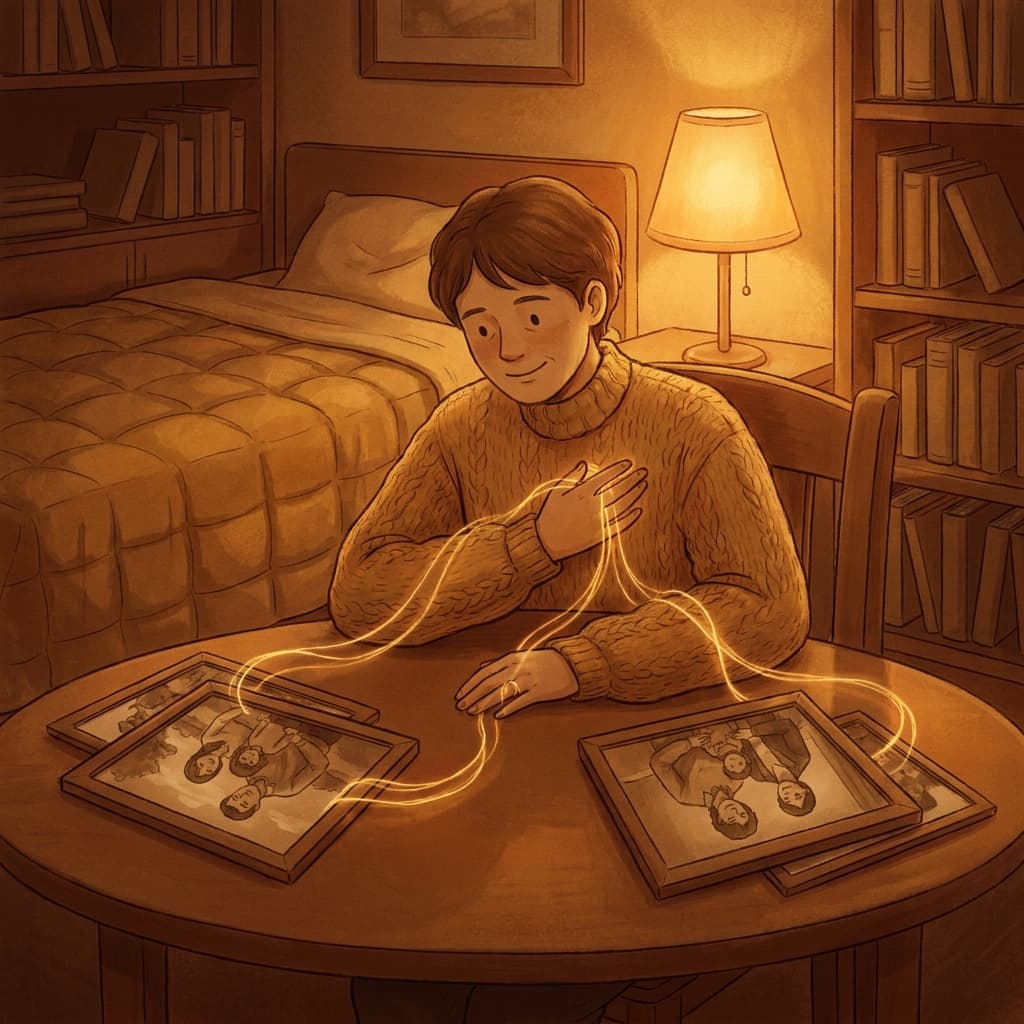
Your family of origin is the primary authoring party. Every household runs on operating assumptions about power, closeness, conflict, affection, and independence — even if no one ever states them explicitly. Children absorb these assumptions the way they absorb language: unconsciously, completely, and before they have any basis for comparison.
Attachment research confirms this. Your early relationships with caregivers established a template for how closeness works — what safety feels like, how much space is normal, what it means to need someone. These templates are not destiny, but they are sticky. You will tend to recreate the emotional architecture of your childhood, even when you consciously want something different.
Beyond the family, broader cultural narratives also write these contracts. Romantic movies tend to feature the "soulmate" model: the right person completes you, conflict is a sign of wrongness, and passion should be constant. These stories give you a very specific — and very unrealistic — set of expectations about what relationships should look and feel like.
How They Create Conflict
The conflict does not usually announce itself as a contract violation. It shows up as frustration, distance, or confusion about why your partner "just does not get it."
Consider this common scenario: one partner grew up in a household where Saturday morning was sacred family time — everyone home, everyone together. The other grew up with independent weekends — each person doing their own thing, reconvening in the evening. When they try to plan a weekend, they experience the gap not as a negotiation but as a referendum on commitment. "If you loved me, you would want to be together." "If you loved me, you would understand I need space."
Neither reading is correct. But both feel true to the person holding the contract. And neither person can see that the conflict is not about the weekend — it is about two entirely different relationship blueprints that were never compared.

Renegotiating the Contracts
The good news: hidden contracts can be made explicit. And once they are visible, they can be renegotiated. This is one of the core tasks of a healthy long-term relationship — not signing a contract once, but continuously examining and updating the operating assumptions you both carry.
Make Your Family Map
Take some time to map the emotional operating system of your family of origin — separately. How was conflict handled? How was affection expressed? What did closeness look like? What was the balance of independence and togetherness? Write it down. This is not about blame; it is about context. Understanding where you come from makes it easier to understand why you experience things the way you do.
Name the Moment of Friction
The next time you feel a flash of frustration with your partner — that sense of "they should know better" or "this is just how it is" — pause and ask: is this a contract I am carrying? Am I assuming my way is the normal way when it is actually just my way? This single question does not solve the problem, but it opens a door to a different kind of conversation.
Translate "Should" Into "I Need"
Hidden contracts often hide behind the language of should: "you should not need space," "a real partner would just know," "couples who love each other do not fight like this." These shoulds obscure real needs. When you notice a should, try translating it: what am I actually needing here? What is the unmet need behind this expectation? Then share that with your partner — not as a should, but as a genuine request.
Build a Relationship That Is Yours, Not Just Inherited
The goal is not to destroy every contract you inherited and start from scratch. That is neither possible nor desirable — your patterns contain wisdom as well as limitations. The goal is to make the implicit explicit so that you and your partner can consciously choose what your relationship runs on. To examine the defaults, question them, and build something that works for the two of you — not just the emotional software you were given.
The Deeper Principle
Every relationship inherits a set of operating assumptions. Most couples never examine them. The ones who do — who take the time to understand their own contracts and make them visible to each other — are the ones who build something more intentional, more弹性, and more durable.
The question is not whether you have hidden contracts. You do. The question is whether you are willing to surface them, question them, and renegotiate them with your partner. That work is not romantic. But it is what makes a relationship last.