The Silent Fears We Bring to Relationships (And How to Finally Talk About Them)
Most relationship conflicts aren't really about the dishes or the money. They're about fear. Here's how to name the hidden fears quietly undermining your connection.
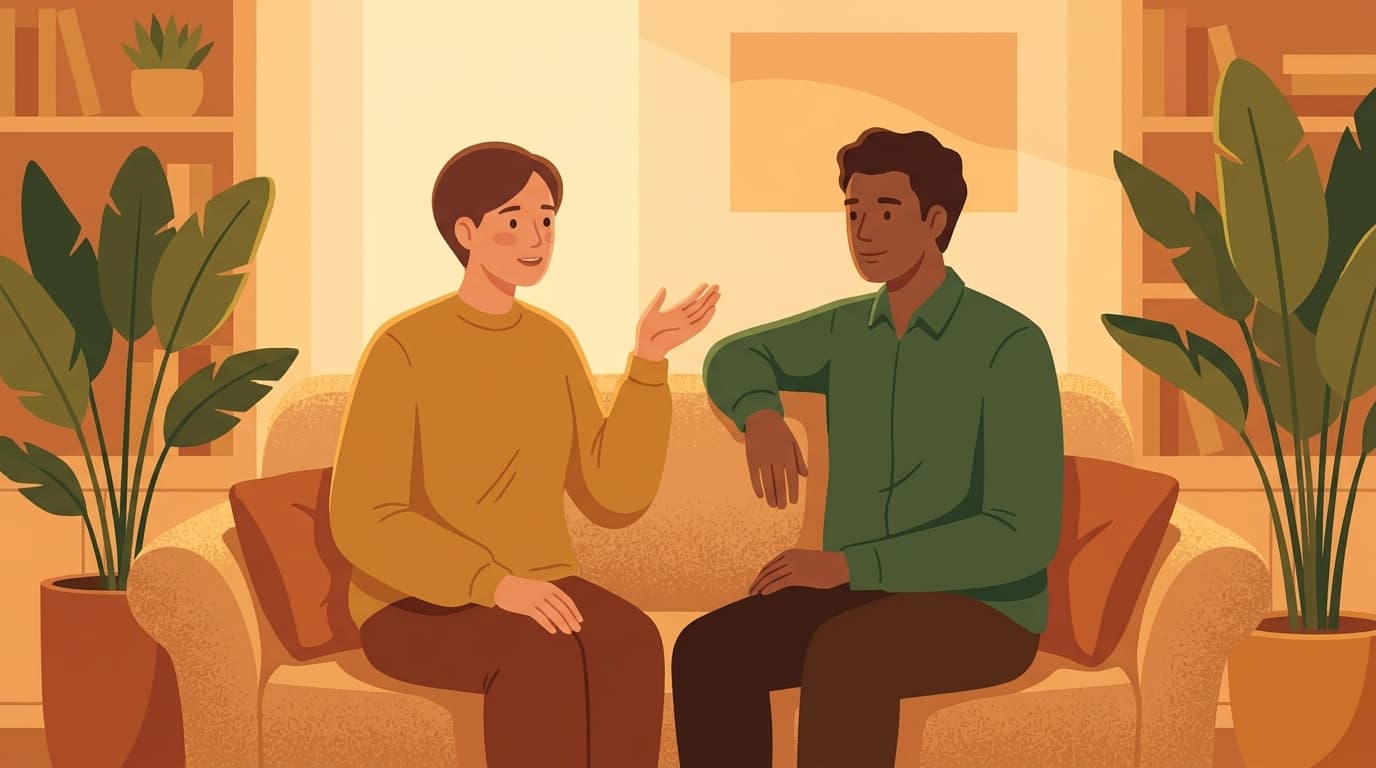
You snap at your partner for leaving a glass on the counter. But the glass isn't really the issue. It's the voice in your head that says: If they can't even do this small thing, do they really care about this relationship?
They cancel plans last-minute and you spiral. Not because the plans mattered that much — but because part of you wondered: Are they pulling away? Is this how it ends?
Sound familiar?
Most relationship conflicts follow a predictable pattern: something small triggers something huge. The argument about the dishes is rarely about the dishes. It's about the silent fears underneath — the ones we rarely name out loud, and sometimes barely even recognize in ourselves.
Psychologists call these implicit beliefs or attachment fears. John Bowlby, who pioneered attachment theory, argued that every adult carries an internal working model of relationships — a set of beliefs about whether people can be trusted, whether love is stable, whether you're worthy of being chosen. These beliefs form long before we're in relationships ourselves. And they show up in ways we least expect.
The Five Hidden Fears That Show Up in Every Relationship
1. Fear of Abandonment
This one wears disguises. Sometimes it looks like clinginess. Sometimes it looks like picking fights just to see if your partner will stay. Sometimes it doesn't look like anything at all — until they mention leaving, and suddenly your chest tightens and your brain goes dark.
The fear of abandonment often stems from early experiences — a parent who left, a divorce, periods of emotional unavailability. But it doesn't care about origins. In the present moment, it can make you read exit signs into ambiguity, chase proximity when distance would be healthier, and struggle to trust that your partner is actually choosing to stay.
How it shows up: Jealousy that feels disproportionate to the situation. Difficulty being alone. Scanning for signs of withdrawal. Panic when your partner needs space.
2. Fear of Rejection
Where abandonment fears are about being left, rejection fears are about not being enough. They show up as a constant background hum: if I show them who I really am, will they still want me? If I ask for what I need, will they think I'm too much?
People with strong rejection fears often suppress their needs, agree when they disagree, and present a carefully curated version of themselves. The cost is exhaustion. And eventually, resentment.
How it shows up: People-pleasing. Withholding真实 opinions to avoid conflict. Feeling like a impostor. Difficulty believing compliments.
3. Fear of Engulfment
The inverse of abandonment — here, the fear is that closeness will consume your identity. That you'll lose yourself in the relationship, become someone unrecognizable, or sacrifice everything that makes you you.
This fear often shows up as a need for independence that borders on isolation. Your partner's need for closeness feels suffocating, even when it's completely reasonable.
How it shows up: Pulling away when things get close. Resenting your partner's needs. Feeling trapped by commitment. Sabotaging intimacy to create distance.
4. Fear of Being Judged
What if they really knew me? This fear drives people to hide their struggles, present a perfect facade, and avoid vulnerable conversations. It's the fear that parts of yourself — the messy, uncertain, shameful parts — will lead to withdrawal of love.
How it shows up: Hiding financial struggles. Concealing mental health challenges. Avoiding conversations about past failures. Keeping score of who's暴露 more.
5. Fear of Not Being Met
This is the quietest fear — and maybe the most painful. It's the belief that if you reach out, speak your need, show your wound, there won't be anything there to meet you. The other person won't know what to do. They'll freeze. They'll make it worse.
It's a fear rooted in developmental experiences where reaching out was met with indifference or injury. And it makes intimacy feel dangerous — because the very act of reaching increases the risk of missing.
How it shows up: Withdrawing before your partner can. Testing rather than asking. Filling the space with deflection instead of real requests.
Why Naming the Fear Changes Everything
Here's the thing about silent fears: they're most powerful when they're unconscious. Once you can name them — both your own and your partner's — they lose much of their grip.
Naming externalizes the fear. Instead of the fear running the show behind the scenes, it becomes an object you can examine together. I notice I'm feeling afraid that you're pulling away. That's my abandonment fear talking, not necessarily the truth of what's happening.
This is the move from being in the fear to observing the fear — and it's the difference between reacting and responding. Research on metacognition (thinking about thinking) shows that the simple act of labeling an emotion reduces its intensity by up to 50%.
Naming also invites your partner in. When you name your fear, you're not asking your partner to fix it. You're giving them context. You're saying: When I react this way, it's not really about you — it's about this thing I'm carrying. That framing alone can prevent countless unnecessary escalations.
How to Talk About Your Hidden Fears With Your Partner
Sharing fears is itself frightening — which is exactly why it matters. Here's a framework for doing it in a way that creates connection rather than overwhelm.
Start with self-observation, not accusation
Before the conversation, do a little detective work. Which fear is yours? When you notice yourself getting triggered, pause and ask: What am I afraid is happening here? What story am I telling myself?
Then share from that observation: I noticed I got quiet after you mentioned going out with your friends. I think my fear of you pulling away got activated. Can we talk about it?
Notice the difference between that and: You're always choosing your friends over me.
Use the “I'm noticing my fear" frame
Language matters enormously. Saying I'm afraid is vulnerable but clear. Saying I'm noticing my fear adds a layer of observation that creates space — for you and for your partner.
For example: I'm noticing my fear that I'm not enough for you. I don't want to act on it by pulling away, but I wanted to name it so you know what's happening underneath.
Ask your partner to do the same
Sharing fears should go both ways. After you share yours, invite theirs: When I do X, does anything come up for you? I'm curious what fears we each carry that affect how we show up.
This isn't a therapy session. It's a conversation. But having the vocabulary and the mutual agreement to name fears transforms how couples navigate conflict.
Make a “fear map"
A practical exercise: each person draws their top 2-3 fears on paper. Then share them. You don't have to solve anything — just see each other's maps. Research on perspective-taking shows that understanding why someone behaves the way they do reduces conflict by up to 40%.
The goal isn't to eliminate the fears. It's to understand them — yours and your partner's — so they don't operate invisibly.
What to Do When Your Partner's Fear Is Activated
The real skill isn't just naming your own fears — it's recognizing when your partner is being driven by theirs. This is attunement: the ability to read the fear underneath the reaction.
When your partner suddenly withdraws or escalates, try this pause: What might they be afraid is happening right now?
Then respond to that. Not the surface behavior, but the fear beneath it. I can see you're pulling away. I'm wondering if you're afraid I'm going to reject you. I'm not. Can we slow down?
This is radically different from defending yourself, arguing back, or escalating. It's meeting your partner in their fear — which is one of the deepest forms of emotional intimacy there is.
The Courage to Be Known
Every relationship holds two inner worlds. Each person carries fears shaped by their history — their childhood, their past relationships, their unmet needs. Most of the friction in relationships comes not from incompatibility, but from two people trying to navigate their own fears without ever naming them.
Naming your fears won't eliminate them. You'll still have the abandonment fear. The rejection fear. The engulfment fear. But when you can see them clearly and share them honestly, they stop running the relationship from the shadows.
Instead, you're left with something more powerful: two people who know each other's vulnerabilities — and choose each other anyway.
Know Your Fear Patterns
JikoSync helps couples identify the hidden patterns and fears that show up in their relationship — and build the skills to navigate them together with honesty and care.
Try JikoSync Free →