The Power of Eye Contact in Relationships: How Looking Changes Everything
Eye contact is one of the simplest, most underrated tools couples have. It costs nothing, takes seconds, and can shift the entire emotional field between two people. Here is why it matters so much and how to do it better.
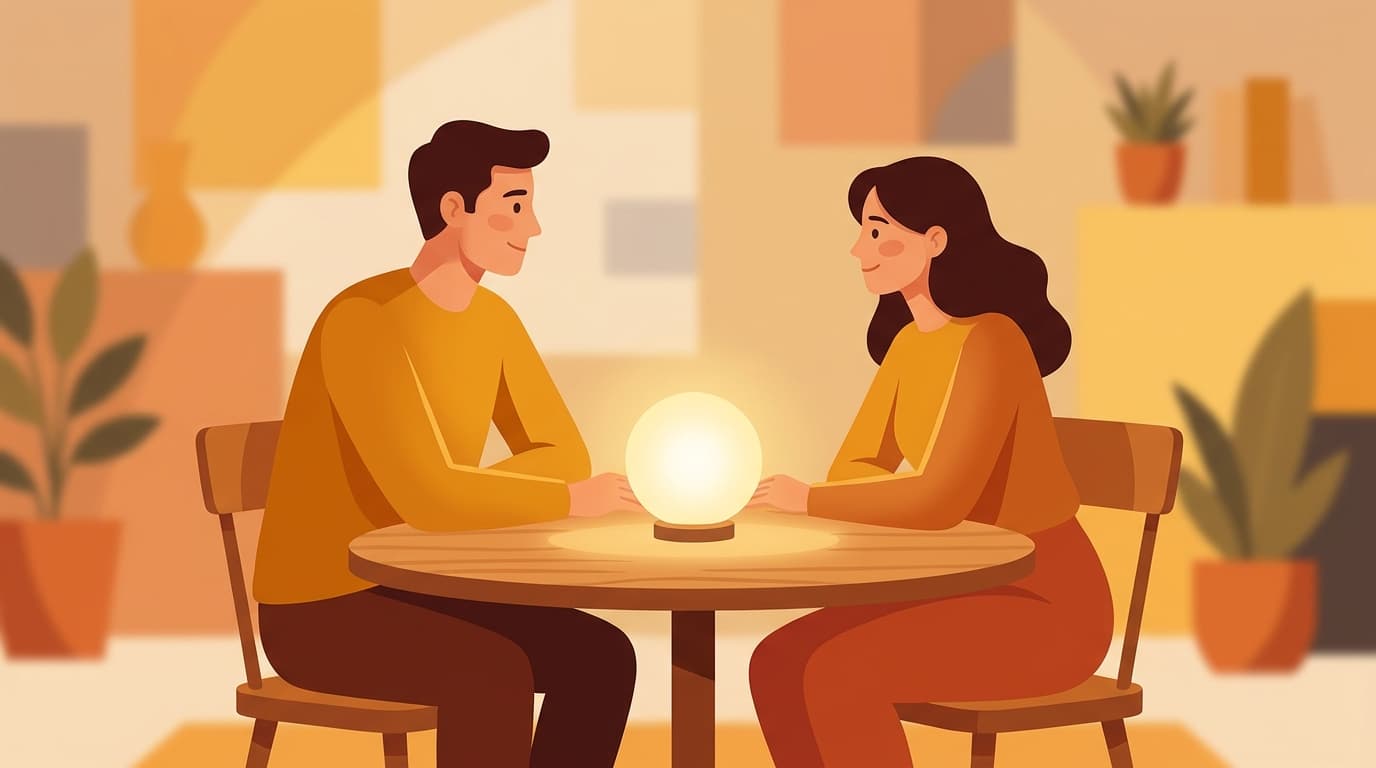
Something remarkable happens when two people really look at each other. The world narrows. The to-do list fades. There is just this person, right here, and the quiet fact of being seen by them. For couples who have been together a while, eye contact can feel like a lost language — easy to drop, easy to forget. Bringing it back can change more than you would expect.
Eye contact is not just a romantic gesture. It is a neurological event. Research from the Max Planck Institute shows that direct gaze activates brain regions associated with reward and social processing. When your partner looks at you with warmth, your nervous system registers safety. When you look back with the same quality of attention, you are not just seeing them — you are communicating something deep without saying a word.
Key Takeaways
- Eye contact activates the brain's reward centers and signals emotional safety.
- Sustained eye contact can lower cortisol and reduce relationship stress.
- Couples who maintain good eye contact report higher satisfaction and easier conflict repair.
- Simple daily habits can rebuild the skill of holding eye contact naturally.
What happens in the brain during eye contact
When you lock eyes with your partner, a cascade of chemical events unfolds. Oxytocin — the bonding hormone — rises. Cortisol — the stress hormone — drops. The brain's fusiform gyrus, responsible for face recognition, fires at full capacity, encoding your partner's expression in rich detail. You are not just looking at them. You are absorbing and processing a volume of emotional data that your conscious mind cannot fully articulate.
This is why eye contact feels different from any other form of physical touch or conversation. It is simultaneous input and output. You are giving and receiving at the same time. The Gottman Institute identifies "bids for connection" as the building blocks of emotional intimacy. Eye contact is the most direct bid there is — and the most direct response.

Why couples lose eye contact over time
Early in relationships, eye contact is almost automatic. Everything is new, the stakes feel high, and presence is easy to maintain. But once a relationship settles into routine, eye contact competes with phones, logistics, fatigue, and distraction. Partners start looking past each other rather than at each other.
This is not a character flaw. It is a normal pattern. The American Psychological Association notes that busyness and digital distraction are among the top reasons couples drift apart emotionally. Eye contact is usually the first casualty. But unlike deeper forms of disconnection, it is one of the easiest to reverse — once you know what to practice.
How eye contact affects conflict and repair
One of the most practical reasons to maintain eye contact is its role in conflict repair. During an argument, most people look away — scanning for threats, shutting down emotionally, or simply trying to think. But when one or both partners stays present with eye contact during a hard conversation, the brain has a harder time disengaging emotionally. Presence keeps the window open.
This does not mean staring unblinking during a heated fight. It means coming back to eye contact during the repair phase — the moment when things are cooling down and you are rebuilding understanding. Eye contact in that moment says, "I am still here. I am not leaving. We are still us." Our article on repair attempts in relationships goes deeper into these turning-back moments.

6 ways to bring more eye contact into your relationship
1. The 3-second greeting
When your partner comes home, pause whatever you are doing, look at them directly, and hold eye contact for at least 3 seconds before speaking. This single habit — done daily — can shift the emotional baseline of your entire evening. It is a micro-ritual that says, "You matter more than my phone right now."
2. Put your phone face-down
Eye contact requires visual bandwidth. If your phone is in your hand or on the table, your gaze will drift toward it. Making the phone invisible during conversations is not a sign of discipline — it is a precondition for intimacy.
3. Practice soft eyes
"Soft eyes" is a term from therapy and mindfulness: instead of narrowing your gaze or staring intensely, let your eyes relax while staying open and present. Hard, focused staring can feel confrontational. Soft eyes feel warm and inviting. It is a small adjustment that changes how the other person responds.
4. Use eye contact during check-ins
If you do weekly check-ins (and if you do not, our article on weekly relationship check-ins explains why you should start), make eye contact part of the structure. Sitting across from each other and maintaining gaze while talking about your week forces a quality of presence that casual couch conversations rarely achieve.
5. Look while listening
Most people look away when processing emotional content. Try this instead: when your partner is sharing something important, maintain eye contact the entire time. Not to stare, but to stay present. Research shows that active eye contact during listening signals empathy and increases the speaker's sense of being understood.
6. Build up gradually
If sustained eye contact feels uncomfortable or unfamiliar, start small. Five seconds of real eye contact at the end of a conversation is enough. You do not need to transform overnight. The point is consistency, not intensity. Over weeks, the natural duration will extend as both partners get more comfortable with presence.
Signs eye contact is getting healthier in your relationship
You may notice that conversations feel more productive, conflicts de-escalate faster, or you feel more "seen" by your partner. On the flipside, if eye contact feels consistently uncomfortable or avoided, it can be worth exploring in couples therapy. Uncomfortable eye contact is sometimes a signal of deeper distrust or unprocessed hurt — worth addressing rather than working around.
Frequently asked questions
Why is eye contact so powerful in relationships?
Eye contact triggers oxytocin release, lowers cortisol, and activates the brain's social reward circuits. It also signals presence, attention, and emotional availability — all things that build trust and safety over time.
What if my partner is not comfortable with a lot of eye contact?
Some people find prolonged eye contact overwhelming, especially if they grew up in environments where it was discouraged or if they have avoidant attachment patterns. Meet them where they are. Start with shorter durations and soft eyes, and let it build naturally. Compelling someone into intense eye contact can backfire.
Can eye contact improve intimacy?
Yes. Sustained, warm eye contact activates the same neural pathways associated with physical and emotional intimacy. Many couples find that rebuilding eye contact — even without changing anything else — makes their relationship feel closer and more alive.
The bottom line
Eye contact is one of the most underestimated tools in a couple's toolkit. It costs nothing. It takes seconds. And it communicates something that words often cannot: I am here with you. I see you. You are not alone.
Try the 3-second greeting tonight. Put your phone face-down during dinner. Look at your partner when they speak. You may be surprised how different your relationship feels when you commit to actually seeing each other.
Want help building deeper daily connection?
JikoSync guides couples through evidence-based exercises that bring more presence, warmth, and eye contact into your everyday interactions.
Try JikoSync Free →