Scorekeeping in Relationships: How to Stop Counting and Start Connecting
When every chore, favor, and sacrifice gets mentally logged, intimacy starts to feel like a transaction. The good news is that this pattern can change.

Scorekeeping in relationships happens when one or both partners keep a running mental tally of who did more, gave more, remembered more, or sacrificed more. It often starts innocently, then slowly turns love into a ledger.
This article is for couples who feel stuck in resentment, fairness fights, or the quiet belief that, "I care more than you do." If that sounds familiar, you do not need more guilt. You need a better system for teamwork.
Key Takeaways
- Scorekeeping usually signals unmet needs, unclear expectations, or an invisible mental load.
- Fair does not mean 50-50 every day. It means both partners feel seen, valued, and supported over time.
- Resentment drops when couples replace mind-reading with specific requests, shared systems, and weekly repair.
- The goal is not to ignore imbalance. The goal is to address it without becoming opponents.
Why scorekeeping hurts relationships
Keeping score can feel protective. If you are exhausted, underappreciated, or carrying the invisible labor of planning, remembering, and anticipating, the tally gives structure to your frustration. But it also changes the emotional frame of the relationship. Instead of, "How do we handle life together?" the question becomes, "Who is winning and who is losing?"
Research from the American Psychological Association consistently shows that relationship satisfaction depends heavily on responsiveness, fairness, and communication quality, not on perfect equality in every moment. Couples get into trouble when imbalance becomes chronic and unspoken.
In practice, scorekeeping often shows up in small phrases: "I always initiate," "I did the last three bedtime routines," or "Why do I have to ask every single time?" Those complaints are not trivial. They usually point to a real issue beneath the surface.
What scorekeeping is usually really about
Most couples are not actually fighting about dishes, calendars, or who texted first. They are fighting about meaning. The hidden message is often one of these: "I feel alone," "I feel taken for granted," "I do not trust that I can rely on you," or "I am tired of being the relationship manager."
That is why scorekeeping often overlaps with emotional safety, active listening, and weekly relationship check-ins. When people feel heard and supported, they usually count less. When they feel unseen, the spreadsheet appears fast.
7 ways to stop scorekeeping in relationships
1. Name the pattern without attacking
Try, "I have noticed I am keeping score, and I think it means I am overwhelmed," instead of, "You never do your part." A softer start gives you a much better shot at honesty without defensiveness.
2. Separate visible tasks from invisible labor
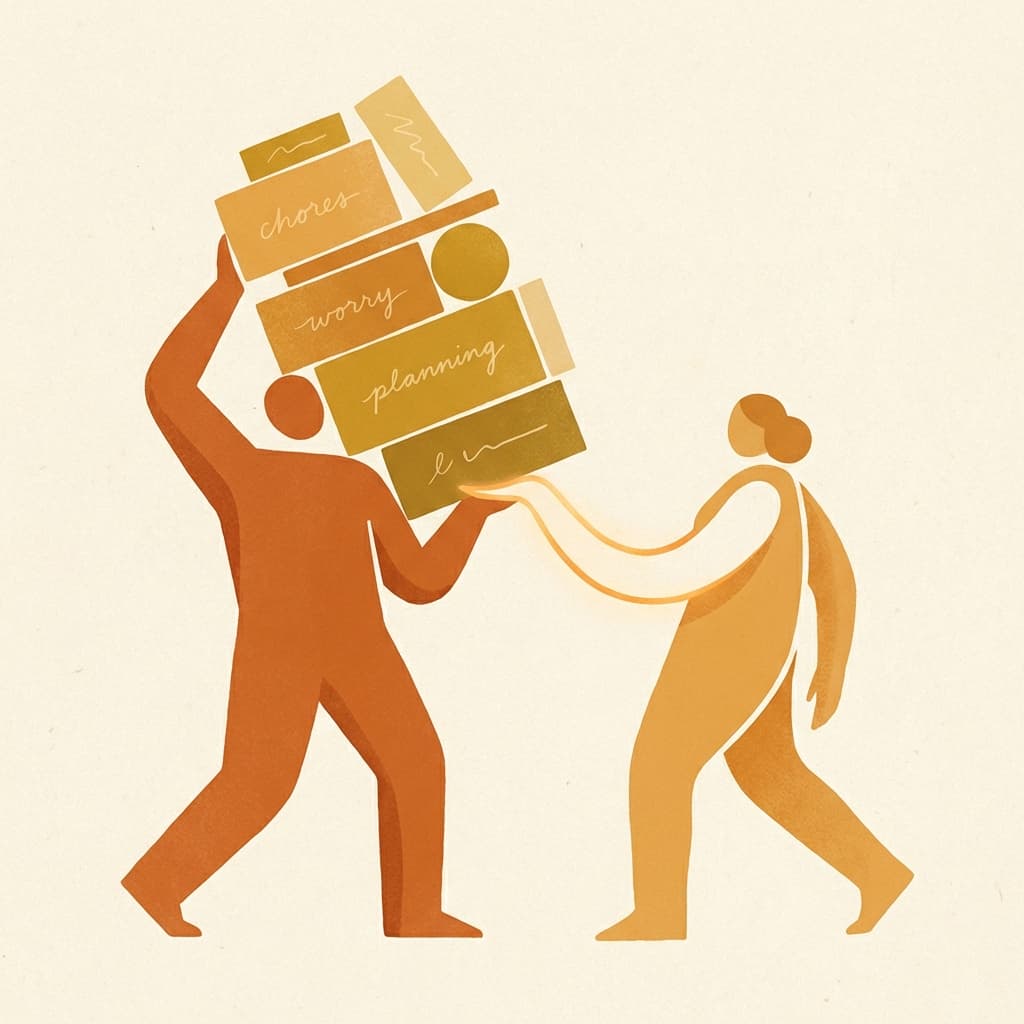
Cooking dinner is visible. Remembering the groceries, noticing the laundry detergent is low, and booking the pediatrician are invisible. Many couples look equal on paper while one person carries 70 percent of the planning burden. Naming that difference matters.
3. Stop arguing for exact 50-50
Healthy relationships are rarely split evenly day to day. One week it may be 60-40, the next 30-70. What matters is whether the overall system feels fair, flexible, and mutually respectful.
4. Make requests specific and observable
"Help more" is vague. "Can you handle daycare pickup every Tuesday and Thursday this month?" is actionable. Specific requests reduce disappointment and make follow-through easier to see.
5. Build a 15-minute weekly logistics check-in
Spend 15 minutes once a week reviewing chores, emotional load, schedule pressure, and what support each person needs. Short, regular maintenance prevents a 3-month resentment backlog.
6. Appreciate effort out loud
According to The Gottman Institute, stable couples maintain far more positive than negative interactions during conflict and daily life. Simple appreciation like, "Thanks for handling bedtime," lowers the urge to keep receipts.
7. Repair resentment before it hardens
If the tally has been running for months, do not pretend nothing is wrong. Use repair attempts, apologize where needed, and agree on one concrete change each partner will make over the next 7 days.

A simple reset conversation
If you want to stop scorekeeping in relationships, try this structure: name one area that feels imbalanced, describe the impact, ask for one practical change, then ask what feels hard on their side too. Research supported by the National Institutes of Health shows that perceived partner responsiveness strongly shapes trust, closeness, and long-term stability. Feeling responded to matters.
A useful script sounds like this: "I do not want us to become opponents. Lately I have been carrying too much of the planning, and I can feel resentment building. Could we split the calendar and meal planning differently this week? I also want to hear where you feel stretched." That is honest, specific, and team-oriented.
Frequently asked questions
Is scorekeeping in relationships always unhealthy?
Not always. Briefly noticing imbalance can help identify a real problem. It becomes unhealthy when counting replaces communication and turns every interaction into evidence for a case against your partner.
Why do I keep score with my partner?
Usually because something important feels unseen. Common drivers include resentment, burnout, unequal mental load, unclear expectations, or fear that your needs will not matter unless you document them.
How do couples create a fairer system?
Start with visibility. List responsibilities, include invisible labor, assign ownership clearly, and revisit the plan weekly. Fairness works better as an ongoing conversation than as a one-time negotiation.
The bottom line
Scorekeeping in relationships is usually a protest against disconnection, not proof that love is gone. If you are counting, something needs care. Bring that into the open, make the invisible visible, and replace vague frustration with shared structure.
The healthiest couples are not the ones who never feel things are uneven. They are the ones who notice early, talk honestly, and rebalance before resentment becomes the third person in the room.
Want help turning resentment into teamwork?
JikoSync guides couples through therapist-inspired exercises that make communication clearer, emotional labor more visible, and repair easier when tension builds.
Try JikoSync Free →