How to Reconnect With Your Partner After Growing Apart
Growing apart doesn't mean it's over — it means it's time to be intentional about finding your way back.

You used to finish each other's sentences. Now you can barely finish a conversation. You sleep in the same bed but feel miles apart. The spark that once burned so bright has dimmed to a flicker — and you're wondering if it's gone for good.
Here's the truth: growing apart is one of the most common relationship challenges, and it doesn't mean your relationship is broken. Life happens — careers get demanding, kids take over, routines become autopilot. According to a study published in the Journal of Marriage and Family, nearly 55% of couples report feeling emotionally disconnected at some point during their relationship.
The good news? The fact that you're reading this means you care enough to try. And that's already half the battle. Let's explore seven proven strategies to bridge the distance and reconnect with the person you chose.
1. Acknowledge the Distance — Without Blame
The first step is the hardest: admitting out loud that something has shifted. Many couples avoid this conversation because it feels like an accusation. But naming the distance isn't about assigning blame — it's about creating a shared starting point.
Try saying: “I've noticed we haven't been as connected lately, and I miss us. Can we talk about it?” This opens the door without putting your partner on the defensive. Relationship therapist Dr. Sue Johnson calls this a “softened startup” — and research shows it's the single biggest predictor of whether a difficult conversation goes well or explodes.
2. Understand What Pulled You Apart
Drifting apart rarely happens because of one big event. It's usually a slow accumulation of small disconnections: skipping date night for the third week in a row, choosing your phone over a real conversation, or simply forgetting to ask how their day was.
Common culprits include:
- Life transitions — new job, new baby, moving cities
- Unresolved conflicts — sweeping things under the rug instead of addressing them
- Individual growth — one partner evolves while the other stays the same
- Technology — screens replacing face-to-face connection
- Stress and burnout — having nothing left to give at the end of the day
Understanding the “why” helps you address the root cause instead of just treating symptoms.
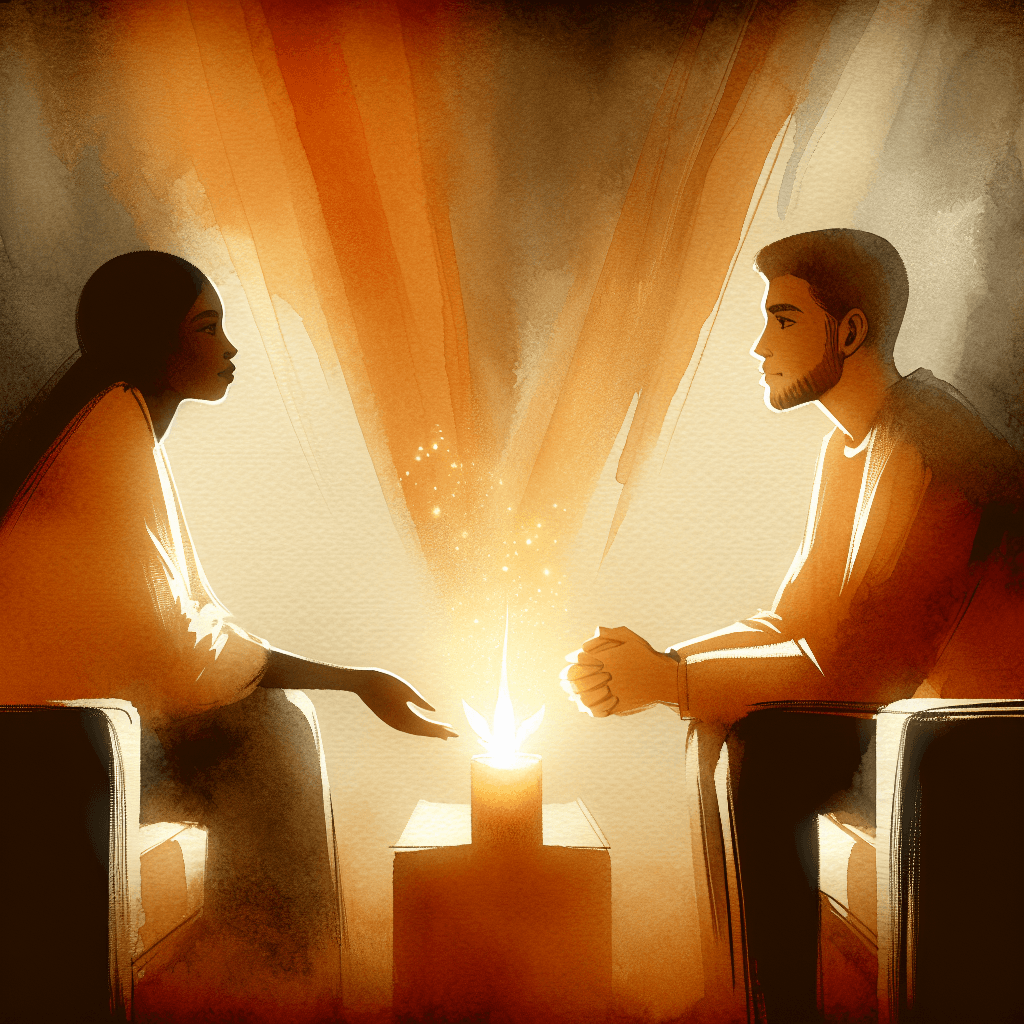
3. Rebuild Your Friendship First
Dr. John Gottman's research at the Love Lab found that the foundation of every lasting relationship is friendship. Before you can reignite passion or fix big issues, you need to genuinely enjoy each other's company again.
Start small. Share something funny you saw today. Ask about their opinion on something random. Cook a meal together without a plan. The goal isn't grand romantic gestures — it's rediscovering the person behind the routine.
Gottman calls these “bids for connection” — small moments where one partner reaches out and the other turns toward them. Couples who stay together respond positively to these bids 86% of the time. Couples who divorce? Only 33%.
4. Create New Shared Experiences
Nostalgia is comforting, but you can't reconnect by trying to recreate the past. You're both different people now — and that's actually exciting. The key is building new memories together.
Research from the Journal of Personality and Social Psychology shows that couples who engage in novel, exciting activities together report significantly higher relationship satisfaction than those who stick to familiar routines. The novelty triggers dopamine — the same neurochemical that flooded your brain when you first fell in love.
Ideas to try: take a class together (pottery, cooking, dance), explore a neighborhood you've never visited, start a two-person book club, or plan a trip somewhere neither of you has been.
5. Schedule Intentional Time Together
“We should spend more time together” is a wish. Putting it on the calendar is a commitment. When you're growing apart, connection needs to be scheduled — not because it's unromantic, but because everything else in your life already is.
Block out at least two hours a week that are just for the two of you. No phones, no kids, no to-do lists. This isn't “date night” with pressure to be fun — it's protected space where your relationship gets to breathe.
A 2023 study from the National Marriage Project found that couples who have a weekly “couple time” ritual are 3.5 times more likely to report being “very happy” in their relationship.

6. Get Curious About Who They Are Now
Here's a question that might sting: When was the last time you asked your partner a question you didn't already know the answer to?
People change. Your partner's dreams, fears, and interests may have shifted in ways you haven't noticed. Psychologist Dr. Esther Perel calls this “the otherness of the other” — recognizing that your partner is a separate, evolving person, not just a known quantity.
Try asking deeper questions: “What's something you've been thinking about lately that you haven't told me?” or “If you could change one thing about our life together right now, what would it be?” You might be surprised by what you learn — and surprise is the antidote to boredom.
7. Consider Professional Support
There's a persistent myth that couples therapy is a last resort — something you do when things are falling apart. In reality, the best time to start therapy is before you're in crisis. Think of it as a tune-up, not a tow truck.
A skilled therapist can help you identify patterns you can't see from the inside, give you tools to communicate more effectively, and create a safe space for the conversations that feel too scary to have alone. Research consistently shows that Emotionally Focused Therapy (EFT) helps 70-75% of couples move from distress to recovery.
If traditional therapy feels like too big a step, tools like JikoSync can help you start exploring your relationship patterns together in a more accessible way — guided exercises, reflective prompts, and structured conversations designed by therapists.
The Distance Doesn't Define You
Growing apart is not a verdict. It's a signal — a sign that your relationship needs attention, intention, and care. The couples who make it aren't the ones who never drift; they're the ones who notice the drift and choose to paddle back.
You fell in love once. You can find your way back. It won't look exactly the same — it might look even better. Because this time, you're choosing each other with open eyes, full awareness, and the kind of love that's been tested by real life.
Start today. One conversation. One question. One small bid for connection. The bridge back to each other is built one step at a time.
Ready to Reconnect?
JikoSync helps couples bridge the distance with guided exercises, reflective prompts, and AI-powered conversations designed by relationship therapists.
Start Your Journey — $20/month