The Science of Gratitude in Relationships: How Appreciation Keeps Love Alive
The couples who last aren't the ones who never fight — they're the ones who never stop saying thank you.

Think about the last time your partner did something thoughtful. Maybe they made coffee before you woke up, listened patiently after a terrible day at work, or simply remembered to pick up the thing you mentioned needing three days ago. Did you say thank you — really mean it — or did it slip by unnoticed?
It's a small moment. But according to decades of relationship science, those small moments of expressed gratitude are more predictive of relationship success than how often you fight, how compatible your personalities are, or even how attracted you are to each other.
Gratitude isn't just good manners. It's relationship rocket fuel — and most couples are running on empty.
What the Research Actually Says
A landmark study published in Personal Relationships found that gratitude was the single most consistent predictor of relationship satisfaction — more than any other emotion measured. Partners who regularly felt appreciated reported feeling more connected, more committed, and more willing to work through problems.
Dr. John Gottman's research at the University of Washington reinforces this. His famous "magic ratio" suggests that stable couples maintain roughly five positive interactions for every one negative interaction. Expressing gratitude is one of the easiest, most natural ways to tip that ratio in your favor.
But here's the kicker: gratitude doesn't just benefit the person receiving it. The person expressing gratitude experiences a boost in relationship satisfaction too. It's a feedback loop — appreciation creates more appreciation.
Why Couples Stop Saying Thank You
If gratitude is so powerful, why do most long-term couples struggle with it? The answer is a psychological phenomenon called hedonic adaptation — our tendency to take repeated positive experiences for granted.
In the first months of a relationship, everything your partner does feels special. They text you back quickly? Amazing. They cook dinner? Incredible. They remember your favorite song? Soulmate material.
Fast forward two years. Those same behaviors become invisible. Not because they stopped mattering, but because your brain filed them under "expected." The effort your partner puts in every day becomes wallpaper — always there, never noticed.
This is where resentment breeds. One partner feels like they're pouring into the relationship with nothing coming back. The other has no idea anything is wrong. Sound familiar?
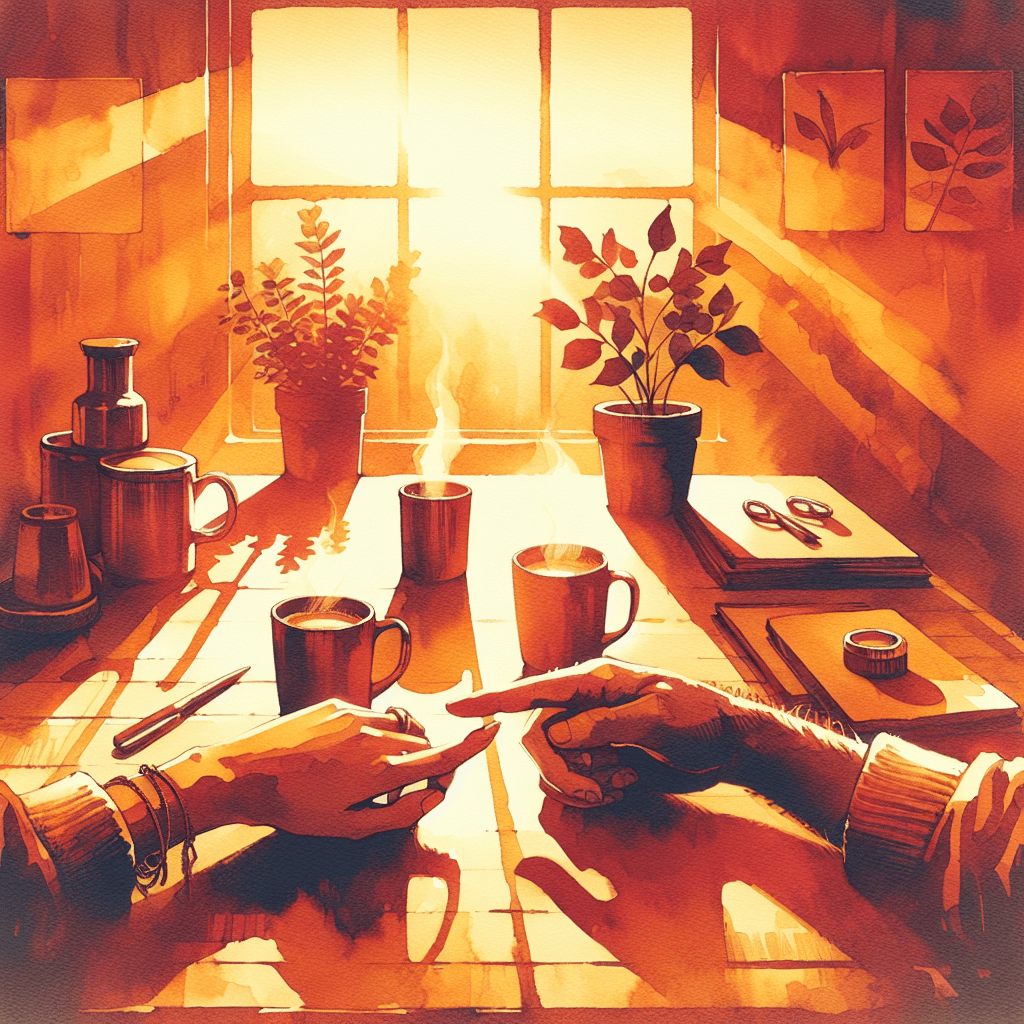
6 Ways to Build a Culture of Gratitude in Your Relationship
Gratitude isn't a one-time fix. It's a practice — something you build into the rhythm of your relationship until it becomes second nature.
1. Be Specific, Not Generic
"Thanks for everything you do" is nice. "Thank you for handling that call with the plumber today — I know it was frustrating and I really appreciate you dealing with it" is powerful. Specificity shows you actually noticed. It tells your partner: I see you. I see the effort. It matters to me.
2. Catch Them Doing Something Right
Most of us are wired to notice what's wrong. The dishes left in the sink. The forgotten errand. The slightly tone-deaf comment. But your partner is also doing dozens of things right every day — you've just stopped looking. Make it a conscious practice: once a day, catch your partner doing something kind, helpful, or thoughtful. Then tell them you noticed.
3. Express Gratitude for Who They Are, Not Just What They Do
Thanking your partner for taking out the trash is good. Telling them you're grateful for how dependable they are is transformative. When you appreciate someone's character — their patience, their humor, their steadiness — you're affirming their identity, not just their labor. That kind of recognition hits different.
4. Write It Down
There's something about written words that spoken ones can't match. A short note left on the counter. A text that says more than "pick up milk." A letter they can re-read when they need it. Research from the University of Pennsylvania found that people who wrote gratitude letters experienced significant increases in happiness — and the recipients did too. You don't need to write a novel. Three honest sentences will do.

5. Create a Gratitude Ritual
Some couples share one thing they appreciate about each other every night before bed. Others do it over dinner. The format doesn't matter — the consistency does. When gratitude becomes ritualized, it stops being something you forget to do and becomes part of how your relationship operates. Even on hard days. Especially on hard days.
6. Receive Gratitude Gracefully
This one gets overlooked. When your partner thanks you, don't brush it off with "it's nothing" or "no big deal." That dismisses their effort to appreciate you. Instead, try: "That means a lot to me" or simply "You're welcome — I'm glad it helped." Let the gratitude land. Accepting appreciation well encourages your partner to express it more often.
What Gratitude Looks Like in Hard Times
It's easy to feel grateful when things are good. The real test is when you're exhausted, annoyed, or in the middle of a rough patch. That's exactly when gratitude matters most.
After an argument, saying "I appreciate that you stayed and talked it through with me instead of shutting down" can completely change the emotional trajectory of the next 24 hours. It doesn't erase the conflict. But it tells your partner that even in tension, you see the good in them.
Researchers call this "gratitude in the trenches" — and it's the kind that builds the most resilient relationships. Anyone can be grateful on vacation. The couples who thrive are grateful on a Tuesday night after a long week.
The Gratitude Gap: Are You Giving Enough?
Here's an uncomfortable exercise. Think about the last week. How many times did you express genuine appreciation to your partner? Now think about how many times you criticized, corrected, or complained. If the second number is anywhere close to the first, you have a gratitude gap — and your partner probably feels it, even if they haven't said anything.
The good news? Closing that gap doesn't require grand gestures. It requires attention. Notice what's already happening in your relationship that's good, and say it out loud. That's it.
Start Today, Not Tomorrow
You don't need a special occasion. You don't need to wait until things are perfect. Right now — today — think of one specific thing your partner did recently that made your life better or easier. Then tell them. Text them. Write it on a sticky note and leave it where they'll find it.
Gratitude is the simplest, most underused tool in your relationship toolkit. It costs nothing, takes seconds, and according to the science, it might be the single most important thing you can do to keep your love alive.
Don't let the good things go unsaid.
Build Stronger Habits Together
JikoSync helps couples turn insights like these into daily practice. Our AI-guided sessions help you communicate better, express appreciation, and grow closer — one conversation at a time.
Try JikoSync Free →